A few summers ago, a homeowner called after a storm rattled the valley. Their white oak, planted by a grandparent in the 1940s, had opened a hairline crack where two main stems met. The canopy still looked lush, and the trunk diameter at breast height pushed 32 inches, a real anchor for the yard. Removing it would have changed the street, not just the lawn. We cabling the canopy and installed brace rods in the union. Today that oak still shades the porch, and the family tells the story to anyone who asks why a steel line disappears into the leaves. Cabling and bracing do not make a tree invincible, but used thoughtfully, they can extend the safe life of a valuable tree by years or decades.
What cable and bracing actually do
Think of a tree as a lever in the wind. The crown acts like a sail. As wind loads, snow, or ice pull on the canopy, stresses build at weak points, usually crotches where stems meet, or along old wounds. Tree Cable and Bracing reduce those stresses by redistributing load. A correctly placed cable connects two stems high in the canopy so that when one moves, the other shares the force. A brace rod or two through a cracked or narrow branch union acts as a pin, preventing the union from prying apart.
What they do not do is glue a tree together after a catastrophic split, force a tree to be structurally sound where it never developed good wood, or remove all risk. A cable is part of a support system, not a substitute for Tree Pruning & Crown Shaping, careful watering, or keeping heavy targets away from the drip line. A good arborist will treat cabling as one element in a plan that can also include selective pruning, soil care, and sometimes hard choices like Tree Removal Services when a defect is too advanced.
Good candidates and red flags
You do not cable every tree. The best candidates hold high value to the property and show a particular set of structural concerns, often combined with an otherwise healthy crown and root zone. Codominant stems with narrow branch angles are common. The pressure that forms between the stems squeezes inward and grows a seam of included bark instead of strong, interlocking wood grain. Add wind or ice, and that seam behaves like a pre-scored line.
Here are practical signs that a tree might benefit from an evaluation for support hardware by a Certified Arborist Consultation:
- Codominant leaders with a tight V-shaped union, especially if you can see included bark or a seam A developing crack where a large limb meets the trunk, even if it closes in dry weather Heavy lateral limbs growing over a roof or driveway that show sagging or roll-over at the branch collar Recurrent storm damage that follows the same movement pattern in the crown Historic, specimen, or irreplaceable trees that lean slightly but have sound root flares and good vigor
Not every example above needs a cable. Sometimes the right answer is reduction pruning to shrink the sail area and rebalance the canopy. Other times, especially over bedrooms or public sidewalks, the right answer is Dangerous Tree Assessment and Removal. The art lies in reading the tree and the site together.
The physics in plain language
A cable is just a line under tension. Where you place it matters more than how thick it is. High placements distribute load more effectively because the lever arm is longer and deflection is smaller at the union. As a rule of thumb, static cables go two thirds of the distance from the union to the top of the leaders they connect. Set too low, the cable sees excessive stretch and becomes decorative rather than functional.
Dynamic behavior is just as important. Trees are not buildings, they move. In gusts, limbs accelerate and decelerate. Shock loads can double or triple the forces seen in steady wind. That is why pretension and correct termination matter. A cable should be snug enough to engage early in a gust, but not so tight that it arrests all movement. Arresting movement increases force rather than reducing it, like slamming a door stop into a swinging door. You want the trees to sway together, sharing the motion.
Snow and ice change the equation. One side of a crown may catch more snow due to exposure, increasing asymmetric loading. A cable that seems lightly used for nine months can see its real work in a two day ice event. Add to that the risk of decay at old wounds and you get a strong case for periodic inspection.
Materials and systems you will hear about
Two primary systems are common: static steel cabling and synthetic dynamic cabling. Both have their place.
Static systems use extra high strength galvanized steel strand, thimbles, and hardware rated by diameter. Terminations are made with dead-end grips or properly formed eye splices and cable clips. Hardware anchors into the stems with lag hooks or, more reliably for larger trees, through-eye bolts with washers and nuts on the far side. Steel resists UV and holds predictably. It requires drilling, a minor wound that, when done correctly, occludes and stabilizes within a season or two.
Dynamic systems use UV-stable rope-like products with shock-absorbing cores and protective sleeves. They loop around stems without drilling and can allow more movement. They are useful on smaller diameter stems or in cases where the client strongly prefers to avoid drilling. They also degrade over 8 to 15 years depending on sun exposure and local climate, so you plan for eventual replacement.
Brace rods are straight steel rods that run through a weak union to prevent it from prying apart. The rods are placed slightly above and below the union, then peened or nutted with large washers. It feels counterintuitive to drill a crack, but the rod stops lever action. An experienced arborist will stagger multiple rods and size them so the wood, not the hardware, remains the primary structure.
Lag hardware has a place in smaller diameter wood where a through-bolt could disrupt too much tissue. Once you approach mid-size and large leaders, through-bolts provide better long-term reliability. Oversizing a lag, driving it too deep, or setting it close to the bark margin invites failure. That judgment call is one reason to bring in someone who has seen thousands of installs, not dozens.
How a proper installation unfolds
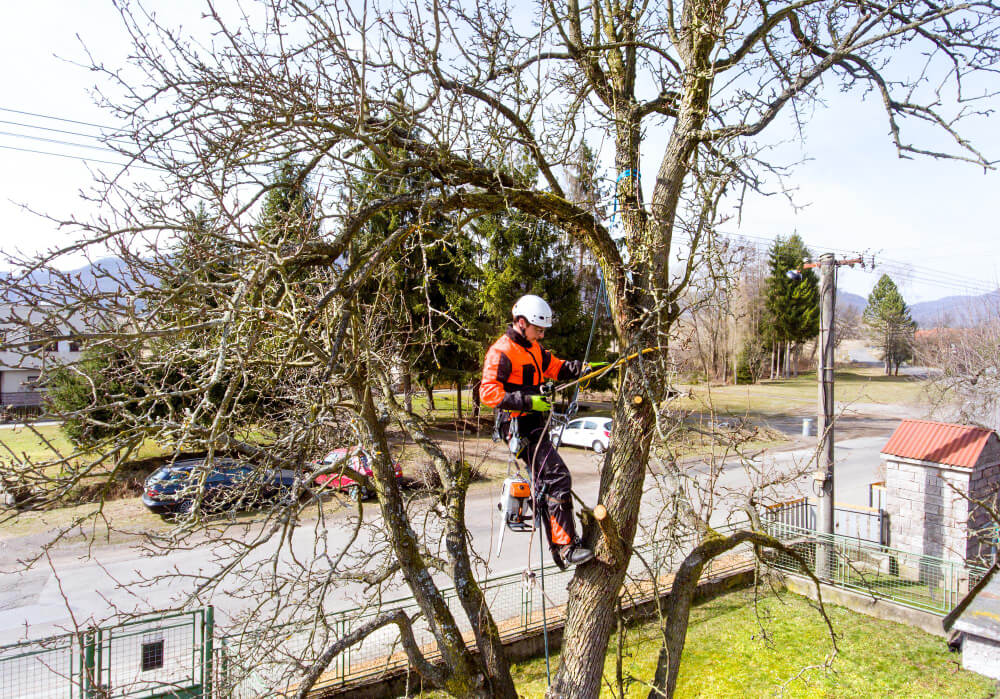
A responsible install blends planning, rigging, precision drilling, and careful finishing. For homeowners, the day can feel like a small mobile workshop in the canopy. If you have never watched a skilled climbing arborist clip in and move through a crown, it is worth stepping back with a coffee and letting them work.
Here is what the process typically looks like from the client side:
- Site assessment and work plan: Confirm objectives, choose cable points, select static or dynamic, and photograph pre-existing defects Access and set-up: Position trucks, place ground protection, set lines, and establish drop zones, with a quick briefing if work is over public areas Canopy work: Climber reaches anchor points, inspects bark, reduces a few branches if needed for balance, and drills or loops terminations Tensioning and finishing: Set pretension to spec, install protective sleeves and thimbles, torque hardware, and record measurements for the job file Clean-up and documentation: Remove debris, label cables if requested, schedule first inspection, and provide a brief report with photos
On most single-cable jobs in average suburban lots, crews arrive mid-morning and finish by mid-afternoon. Add time if brace rods are needed, if a second cable goes into a sister union, or if the job includes Tree Pruning & Crown Shaping to better balance the canopy.
The quiet partner to support systems: pruning
A cable can only help so much if the sail area remains oversized. Reduction pruning aims to shorten competing leaders and bring mass closer to the trunk. A few well-placed reduction cuts, often 2 to 3 inches in diameter and targeted at selected laterals, can drop wind load by 10 to 25 percent without gutting the canopy. The goal is to shape, not strip. Topping destroys structure and invites decay. Crown shaping done right respects branch collars, preserves the tree’s natural form, and reduces lever arms on risky laterals. Plan to revisit reduction every 3 to 7 years depending on species and vigor.
In practice, I often schedule pruning the same day as cabling. The climber can move once through the crown to set hardware and make cuts, saving time and disturbance. With FireSmart Tree Services in mind, this is also when we clean out deadwood that could act as kindling, raise the canopy over roofs, and separate crowns that have grown into one another across property lines.
Inspection, lifespan, and what it costs
No support system is set and forget. Steel hardware can last 20 years or more if sized correctly and installed with corrosion-resistant components. Synthetic systems age faster under sun and weather. Either way, plan on inspections every 1 to 3 years, plus a check after severe storms. We look for frayed strands, loose nuts, thimble wear, bark overgrowth that might be choking a loop, and changes in the union such as widening cracks or decay.
Costs vary by region and access. A single static cable between two leaders on a medium tree might run a few hundred to a thousand dollars. Adding brace rods can raise it by several hundred, and complex multi-cable systems in tall crowns with difficult access can go into the few thousands. Fold in the value at stake. Saving a 60-year-old street maple that screens your living room or a heritage beech that defines a garden can be worth far more than the line item. If a job crosses the threshold where removal and replanting become more rational, your arborist should say so before a single hole is drilled.
Limits, failure modes, and when removal is the safer path
Cables fail in predictable ways. Undersized steel can strand and break under shock loads. Poor terminations slip. Lags pull out of decayed wood. Dynamic rope systems can wear where they pass around a stem if sleeves are not positioned well. More often, the tree fails around the hardware. A crack continues into decayed tissue below a rod, or a limb snaps 10 feet beyond a cable in a heavy ice storm. Good design aims to move the weakest link toward replaceable hardware rather than the tree itself.
There are clear cases where cabling is not appropriate. Advanced decay at the union shows as soft wood, fungal fruiting bodies, or loss of shell thickness when probed. A lean that has https://landenepnh299.trexgame.net/tree-health-check-certified-arborist-consultation progressed over years with soil heaving on the backside and a compressed front root plate is a red light, not a yellow. Roots severed during recent construction can destabilize an otherwise sound crown. In these scenarios, a Dangerous Tree Assessment and Removal can be the responsible step, followed by Stump Removal & Grinding and a thoughtful replant with a species that fits the site. Emergency Tree Services exist for a reason. When a split opens suddenly after a storm, getting the weight off the failing side and clearing the target zone fast reduces risk to people and property.
Fire, wind, and the wildland edge
On the wildland urban interface, trees face twin risks: embers and wind. FireSmart Tree Services treat crowns and understory as a ladder that embers can climb. Cabling does not change ignition risk, but the work package that often travels with it helps. When we are in a crown to place a cable, we can remove deadwood larger than a thumb, separate touching crowns between trees, and reduce overhang on roofs. On the ground, raising the canopy to keep lower branches off shrubs and spacing crowns can slow crown-to-crown transmission. None of this replaces defensible space or roofing choices, but it adds resilience.
Wind exposure also changes near openings. If a neighbor removes a sheltering row of poplars, your formerly protected cedar now stands in the wind’s front line. A cable planned two years earlier may no longer be in the optimal spot. Flag major site changes for your arborist. A five minute recheck might save a failure.
Permits, neighbors, and the urban maze
Depending on your city, installing cables in private trees rarely triggers permits, but pruning in a right-of-way or in a designated heritage tree may. Some municipalities require notice for any work that could affect a tree’s structural integrity, even if that work reduces risk. If a cable crosses a property line canopy or if you need temporary access through a neighbor’s yard, put agreements in writing. Utility lines add complexity. Never plan hardware placements that could foul a service drop if a limb fails. Coordinating with the utility for temporary line covers or an on-site standby is standard on tight sites.
How to choose the right provider
Tree support work sits at the intersection of physics and craft. A credential alone is not a guarantee, but it shows commitment to standards and continuing education. A Certified Arborist Consultation should include a written assessment, clear photos, and options that include doing nothing, pruning alone, cabling with pruning, or removal. Expect to see load sharing diagrams or at least a discussion of why proposed anchor points were selected. Ask whether the work aligns with current industry best practices for support systems and what inspection schedule they recommend.
Insurance matters. They should carry general liability and workers’ compensation. If your project includes work over a public sidewalk or street, ask how they plan to manage pedestrian and traffic control. Reputable providers of Tree Removal Services, cabling, and pruning can supply references. Look beyond the five-star comments and ask a past client what happened when something unexpected came up.
Case notes from the field
A split-potential red maple over a garage: The tree had two codominant leaders forming a narrow union with clear included bark. The owner had already invested in Tree Pruning & Crown Shaping, but the concern remained. We installed two static cables between opposing leaders and set a single brace rod through the union. We also reduced a heavy limb over the driveway by 15 percent in length, keeping cuts under 3 inches and tucked within the natural outline. Three winters later, after a wet snow event dropped 10 inches overnight, the owner texted a photo of the canopy loaded but intact. On the spring inspection, the union showed minor seasonal opening with no sign of shear. The cable thimbles showed light wear and we added sleeves where bark had thickened.
A mature Douglas-fir at the wildland edge: The tree towered above a cabin and leaned slightly east. A previous owner had topped it years ago, leaving a decayed shell at 40 feet. The request was to “make it safe without removing it.” We declined cabling because the top carried significant decay and the lean aligned with a compromised root plate from driveway widening. We provided a Dangerous Tree Assessment and Removal estimate along with an alternative planting plan that added two native conifers and several fire-resistant shrubs. After removal, Stump Removal & Grinding cleared space for a new cedar, and the client scheduled FireSmart Tree Services to widen defensible space near the cabin. It was not the outcome the client wanted at first, but it was the right one.
An historic elm on a downtown sidewalk: The city’s heritage commission asked about support rather than removal. The tree had a repeating pattern of limb failures on the south side, where sunlight pulled growth toward the street. We installed dynamic cabling across two upper leaders to promote shared movement, then trimmed back south-facing laterals to reduce sail. We coordinated with the city for lane closures on a quiet weekday morning and placed signage to keep pedestrians safe. Inspections every two years now include a resistograph sample at the union and sonic readings, which have held stable. The combination of support and ongoing care kept the tree in place and the cafe beneath it happy.
Where cabling fits among your options
Cabling is not a cure-all. It is one tool on a bench that includes pruning, soil care, risk assessment, and removal. The best time to consider it is when a tree carries high sentimental, ecological, or property value, shows a fixable structural weakness, and still possesses the vigor to respond to minor wounding from drilling. It pairs well with Tree Pruning & Crown Shaping in the same season, and it benefits from periodic checkups. If something changes on your site, from a new addition to a neighbor’s Tree Removal Services, invite your arborist back.
If you are unsure where to start, book a Certified Arborist Consultation. A seasoned eye can separate trees that will benefit from support from those that need more decisive action. When a storm hits and you need Emergency Tree Services, call for triage first, then ask whether strategic Tree Cable and Bracing can keep a survivor safe over the long term. And if the answer is removal, do it cleanly, finish with Stump Removal & Grinding, and replant with a species and structure that will need less help in the next generation. That is the quiet promise of good arboriculture: not just saving today’s canopy, but shaping tomorrow’s.
Ace Tree Services Ltd.
Name: Ace Tree Services Ltd.Address: 4656 Wallace Hill Road, Kelowna, BC
Postal code: V1W 4C2
Phone: 250-212-9593
Website: https://acetree.ca/
Hours:
Monday: 7:00 AM - 5:00 PM
Tuesday: 7:00 AM - 5:00 PM
Wednesday: 7:00 AM - 5:00 PM
Thursday: 7:00 AM - 5:00 PM
Friday: 7:00 AM - 5:00 PM
Saturday: 7:00 AM - 5:00 PM
Sunday: Closed
Open-location code (plus code): RHF8+8G Kelowna, British Columbia, Canada
Map/listing URL: https://www.google.com/maps/place/Ace+Tree+Services+Ltd./@49.8232606,-119.4337283,659m/data=!3m2!1e3!4b1!4m6!3m5!1s0x537d8b1d074815c5:0x450b88afa7a41435!8m2!3d49.8232606!4d-119.4337283!16s%2Fg%2F11ydkpnh22
Embed iframe:
Ace Tree Services Ltd. provides professional tree removal, pruning, stump grinding, emergency response, and arborist consultations for properties in Kelowna and across the Okanagan Valley.
The company works with homes, commercial properties, and municipal settings where tree work needs to be planned carefully around buildings, fences, driveways, landscaping, and other site constraints.
Based in Kelowna, the team is positioned to help nearby neighbourhoods and surrounding Okanagan communities with routine tree care and time-sensitive storm cleanup.
Customers looking for careful tree work often want a crew with certified arborist training, insurance, and a methodical approach to higher-risk removals.
Services also include dangerous tree assessment, cabling and bracing, and wildfire risk reduction tree work for properties that need longer-term planning.
To request a quote or discuss tree care options, call 250-212-9593 or visit https://acetree.ca/.
A public map listing is available to help customers confirm the business location and get directions before a site visit or estimate.
For Kelowna property owners who need pruning, removals, or emergency tree help, a local tree service can make it easier to schedule site-specific recommendations and cleanup.
Popular Questions About Ace Tree Services Ltd.
What services does Ace Tree Services Ltd. provide?Ace Tree Services Ltd. lists tree removal, stump removal and grinding, tree pruning and crown shaping, emergency tree service, arborist consultation, dangerous tree assessment and removal, cabling and bracing, and wildfire risk reduction tree work.
Who does Ace Tree Services Ltd. serve?
The company describes its work as serving homes, businesses, and municipalities in Kelowna and across the Okanagan Valley.
Is emergency tree help available?
Yes. Emergency service is listed for downed or uprooted trees, dangerous tree assessment, stabilization work, and branch cleanup. If a tree is near power lines, the safest first step is to stay clear and contact the utility provider before any tree work begins.
Do I always need a permit to remove a tree?
Not always. Permit requirements can depend on where the tree is located and whether it is near a creek, lake, steep slope, or another protected area. It is best to check local rules for the specific property before removal work starts.
How deep does stump grinding usually go?
Standard stump grinding is typically described as going about 6 to 12 inches below ground level, which is often enough for grass or surface landscaping. Deeper grinding may be possible when site plans call for it.
How much of a tree can be safely removed at one time?
That depends on the species, age, health, and structure of the tree. In practice, good pruning is usually about removing the right limbs for health, clearance, and structure rather than chasing a fixed percentage.
What are common signs that a tree may be dangerous?
Large dead limbs, visible cracks, a new lean, root damage, canopy dieback, or storm-related damage can all be warning signs. Trees near structures deserve extra attention when any of those issues appear.
What is cabling and bracing in tree care?
Cabling and bracing are support systems used to reduce the risk of failure in trees with structural weaknesses that may still be worth preserving. They are generally used to add support, not to replace good assessment and ongoing maintenance.
How do I contact Ace Tree Services Ltd.?
Call 250-212-9593.Website: https://acetree.ca/.
Landmarks Near Kelowna, BC
Downtown KelownaThe downtown core is a practical reference point for lakefront neighbourhoods, mixed-use streets, and central residential properties. If your property is near downtown, tree pruning, removals, and cleanup can be planned around tighter access and nearby structures.
Knox Mountain Park
This well-known park north of downtown is a recognizable landmark for nearby homes and hillside properties. If you are close to this area, ask about tree assessment, trimming, or removal work suited to sloped sites.
Mission Creek Greenway
The greenway runs through several parts of Kelowna and is a useful landmark for nearby residential areas. If your property borders or sits near this corridor, site-specific tree planning is especially important.
Pandosy Village
Pandosy is one of Kelowna’s most recognizable neighbourhoods and a common reference point for south-central properties. If you are nearby, request help for pruning, removals, or storm cleanup around homes and small commercial sites.
Rutland
Rutland is a major east Kelowna neighbourhood with a mix of residential and local commercial properties. If you are located in or near Rutland, tree work can be scheduled for both routine maintenance and urgent situations.
Landmark District
This central business-focused area is a practical landmark for offices, service properties, and nearby residential streets. If your site is near the district, ask about careful tree work around parking, access lanes, and built-up lots.
Kelowna’s North End
The North End sits on the edge of downtown and is a useful reference for nearby homes, industrial sites, and commercial properties. If you are in this part of the city, request tree care based on the layout and constraints of the lot.
Airport District
The Airport District is a recognizable north Kelowna reference point for surrounding properties and access routes. If you are in this area, ask about tree services for residential acreage, commercial sites, or roadside cleanup needs.
Glenmore & Dilworth
These established Kelowna neighbourhoods are useful landmarks for central and north-central service calls. If your property is nearby, pruning and removal work can be tailored to mature trees and established landscapes.
Highway 97 Corridor
Highway 97 is one of the city’s main travel routes and a common way to describe location within Kelowna. If your home or property is just off the corridor, a clear landmark reference can help speed up quote scheduling and site planning.